Afghanistan’s Hydraulic Ambitions and their effect on Central Asia
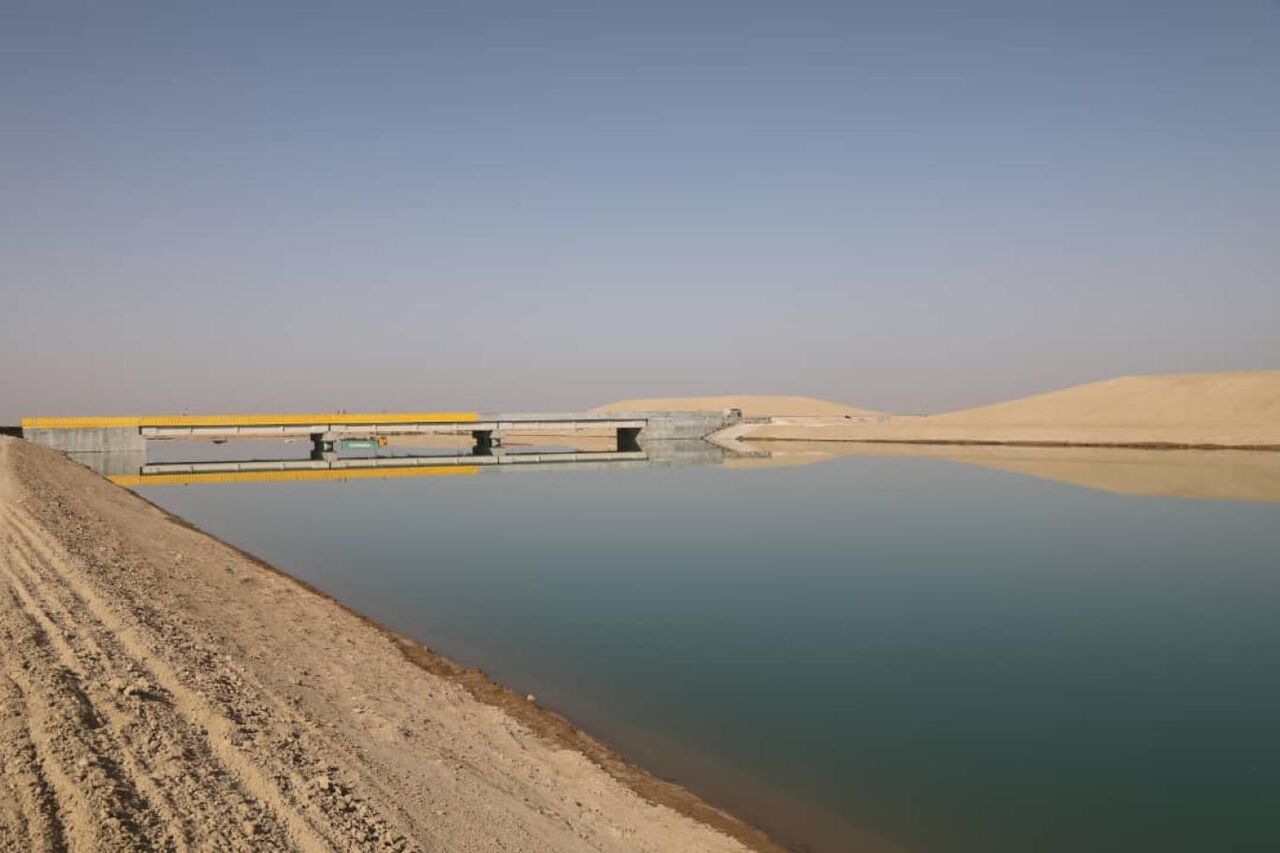
On September 13, Afghan authorities reported that excavation of the second phase of the Qosh Tepa Canal is 93% complete, while the headworks dam is 82% finished, with bridges and water control structures also under construction (Tolonews.com, 2025). The Qosh Tepa project, launched in 2022, is designed to divert about 10 km³ of water annually from the Amu Darya to irrigate roughly 550,000 hectares of farmland in northern Afghanistan. The construction of the canal is expected to be completed by 2028, after which it will take 10 cubic kilometers of water every year from the Amu Darya, reducing its water flow by about one-third (ISAS, 2024). Therefore, the project is expected to further complicate the balance and risks heightening both environmental stress and political tensions in the region.
First of all, the construction of the Qosh Tepa Canal can be seen as a necessary step taken by the Taliban government in Kabul. Afghanistan’s economy remains anchored in the primary sector, with agriculture employing roughly 45% of the labor force (World Bank data, 2023). Poverty is widespread especially in rural districts so the output of a smallholder-dominated farm sector is pivotal to the wellbeing of a very large share of the population. Farming practices remain largely traditional, with limited adoption of water-saving technologies, which translates into high conveyance and field losses. In that context, dependable irrigation and a stable seasonal water supply are not just desirable; they are fundamental to the country’s fragile economic base. Official hazard assessments classify drought risk as high, with major events expected about every five years (ThinkHazard, 2025). The recent record is stark: in 2023, 25 of 34 provinces experienced severe or catastrophic drought conditions at some point (OCHA, 2023), and 42% of districts (167 of 401) were rated high or very high for agricultural-drought risk by the Afghanistan Drought Severity Index developed by IWMI (ACAPS, 2024). Climate change will likely intensify these pressures through greater interannual variability, shifts in snowmelt timing, and higher evapotranspiration, implying that baseline water demand will continue to rise as droughts and water stress grow more frequent and severe.
Demography adds a second, powerful driver. The total fertility rate stands at nearly 4.8 (World Bank, 2023)—among the highest globally and the highest in Eurasia—making Afghanistan one of the world’s youngest societies. The median age is about 17.3 years, and youth aged 15–24 account for roughly 23.7% of the population. The population of Afghanistan is projected to increase from roughly 43.8 million today to 50.0 million by 2030 and 63.3 million by 2040 (UN, 2024). This would have direct water implications: more households requiring safe supplies, expanding urban perimeters with escalating municipal demand, and persistent pressure to bring additional land under irrigation to stabilize food security and rural incomes. In the absence of strong efficiency gains, on-farm, along canals, and within utilities, policymakers will be tempted to prioritize quick, supply-side fixes over lower-cost conservation and demand management.
Beyond the Qosh Tepa Canal, the current authorities have highlighted a portfolio of large works at different stages from operational to proposed including Bakhshabad Dam (Farah River, Farah), Pashdan Dam (Hari Rud, Herat), Kamal Khan Dam (Helmand, Nimroz), and Baghdara/Bagh Dara Dam (Kabul–Panjshir basin). These projects are framed as instruments of food and energy security, as well as state capacity. Yet most sit on transboundary rivers where downstream dependencies are substantial, and the cumulative effects—reduced flows, altered seasonality, and ecological stress are not trivial in an already water-stressed region. The energy context compounds the dilemma: Afghanistan faces chronic electricity shortfalls, recurrent prolonged blackouts, and heavy reliance on imports from neighbors (Tolonews, 2025a). Given the country’s topography and upstream position, hydropower is a natural ambition; however, without parallel investment in efficiency, groundwater stewardship, and cooperative basin governance, expanding impoundments and diversions risk deepening regional water stress rather than relieving it.
Figure 1. Map of the Aral Sea basin

Source: Sabitov, 2018.
Afghanistan is often excluded from what is conventionally defined as Central Asia, which is usually limited to Kazakhstan, Kyrgyzstan, Tajikistan, Turkmenistan, and Uzbekistan. Yet the northern part of Afghanistan is intimately tied to Central Asia through shared water resources and its location within the Aral Sea basin. Afghanistan is one of the upstream states of the Amu Darya, a river that supplies about two-thirds of the total inflow to the Aral Sea. While the bulk of the Amu Darya’s water originates in Tajikistan (commonly estimated at 70–80 percent), Afghanistan’s contribution can reach up to 9 percent (University of Nebraska Omaha, 2025). More importantly, its upstream position means that decisions made in Afghanistan on water use directly affect downstream countries, with consequences extending to the Aral Sea itself.
The Qosh Tepa Canal is the largest water project currently under construction in Afghanistan in terms of intake from the Amu Darya. It is designed to divert about 10 km³ of water annually to irrigate roughly 550,000 hectares of farmland in northern Afghanistan (ISAS, 2024). This is the first major attempt by Afghanistan to secure such a significant share of the river, from which it has historically drawn very little. Beyond its technical scale, the project carries clear political and transboundary implications, as it will substantially reduce the water on which Turkmenistan and Uzbekistan depend.
The canal begins near the Afghan village of Qosh Tepa, at the point where the Amu Darya leaves Tajikistan, and diverts a share of the river southward. After about 20 kilometers it turns west, running roughly parallel to the Amu Darya through the provinces of Balkh, Jowzjan, and Faryab, and ends before reaching the Turkmen border. Once completed, the system is intended to irrigate about 550,000 hectares across these three northern provinces (Mushtaq, 2024). Its starting point at the tail end of Tajikistan’s section of the Amu Darya means the project will affect downstream users, above all Turkmenistan and Uzbekistan, whose rural economies depend heavily on the same river.
Turkmenistan is set to bear the greatest share of the negative consequences. Roughly 90–96% of its water resources originate outside its territory, mainly from the Amu Darya, leaving the country with virtually no alternatives. Its main lifeline, the Karakum Canal, withdraws water some 240 kilometers downstream of the Qosh Tepa intake and carries about 13 km³ annually across the desert to supply Ashgabat and irrigate extensive cotton fields (Travelnotoria.com, 2025). As the capital’s drinking water also depends on this canal, already subject to high evaporation and infiltration losses, any reduction in inflow translates into urban water stress in addition to agricultural losses. Qosh Tepa is intended to irrigate new Afghan farmlands, drawing water in spring and summer - the same peak season Turkmenistan needs for cotton and fodder. Seasonal overlap raises the risk of acute shortages.
Unlike Turkmenistan, which depends almost exclusively on the Amu Darya, Uzbekistan has access to two major rivers, the Amu Darya and the Syr Darya. Nevertheless, its western regions, particularly Khorezm and Karakalpakstan, remain highly reliant on the Amu Darya for irrigation. A further reduction of flow will also exacerbate the ecological catastrophe of the Aral Sea, especially its southern basin, most of which lies in Uzbekistan. While the North Aral has been partially stabilized in recent decades through the Kok-Aral dam and related measures, the South Aral has continued to shrink, since nearly all Amu Darya inflow is already diverted for irrigation in Turkmenistan and Uzbekistan. Qosh Tepa will deepen this decline, eliminating even the occasional surges that sometimes reach the delta. Before the large-scale Soviet irrigation projects, the Aral received about 50–60 km³ of water annually (Vinogradov and Langford, 2001). Today the figure is slightly below 10 km³. The planned 10 km³ diversion for Qosh Tepa is therefore nearly equal to the river’s entire modern inflow, with the potential to dry up the southern Aral almost completely.
Despite the obvious negative consequences, Afghanistan is determined to pursue the project and puts forward several arguments in its defense. First, the Taliban leadership frames the canal as essential for food security, aiming to reduce dependence on wheat and flour imports from Kazakhstan. By irrigating about 550,000 hectares, they seek to expand domestic wheat and cotton production and address rural unemployment. Second, while Afghanistan lies on the Amu Darya, it has historically used only a small share of the river’s flow. The decline of the Aral Sea was primarily driven by large-scale withdrawals in Turkmenistan and Uzbekistan, not by Afghanistan’s minimal use. Other riparian states in the basin - Tajikistan, Turkmenistan, and Uzbekistan - have long exploited the river far more intensively. Against this background, Taliban authorities present Qosh Tepa as Afghanistan’s attempt to claim its “fair share” of a transboundary resource. They also stress that no binding international agreement determines Afghanistan’s allocation, reinforcing their view that the country is within its sovereign rights to develop the river. Third, the canal is presented as a symbol of Afghan engineering capacity and independence after decades of foreign occupation and reliance on aid. For the Taliban government, which still lacks international recognition, the project is meant to demonstrate the ability to undertake major infrastructure without external support (Ibragimova, 2025). Hence, Afghanistan presents its determination in completing the Qosh Tepa canal as well as in carrying out other water projects that will contribute to water stress in Central Asia.
The Uzbek government has publicly acknowledged the risks of the canal but avoids open confrontation. Uzbek emphasizes the diplomatic way of resolving the issue and frames it as a matter for dialogue and cooperation (Upl.uz, 2025). In spite of its extreme dependence on the Amu Darya river, Turkmenistan’s government maintains its isolationist approach in regional issues and has made no strong public statements condemning or even openly discussing the Qosh Tepa canal.
Water has already become one of the key issues in Central Asian diplomacy due to the region's geography, hydrology, demography and global climate change trends. However, the framework for water diplomacy among countries of the region remains fragmented and weak. The existing regional framework for water diplomacy still contains some of the elements and approaches of the Soviet era, in which Afghanistan is not even present. The real state initiatives taken regarding water resources in the region were situational and mostly aimed at targeting one particular issue and often limited to bilateral or trilateral deals. These efforts never converted into a comprehensive solid cooperation framework in resolving water-related issues. The result is that Central Asia’s water diplomacy is more of a patchwork than a coherent mechanism, and projects like Qosh Tepa reveal the limits of that system. In the meantime, the geography of the region shows that Afghanistan is an essentially important part of Central Asia’s water map. By showcasing the canal, the Taliban signal to both domestic and regional audiences that Afghanistan will no longer be a passive player in Central Asian water politics. Although it is limited to Afghanistan, Turkmenistan and Uzbekistan, it is only a part of the overall “water equation” of Central Asia that needs to be solved.
References:
ACAPS (2024). Afghanistan. Understanding drought. Retrieved from: chrome-extension://efaidnbmnnnibpcajpcglclefindmkaj/https://www.acaps.org/fileadmin/Data_Product/Main_media/20240704_ACAPS_Thematic_report_Afghanistan_Understanding_drought.pdf. Accessed on 09.09.2025.
Ibragimova, G. (2025). Afghanistan’s Qosh Tepa Canal Could Trigger a Central Asian Water Crisis. Retrieved from https://carnegieendowment.org/russia-eurasia/politika/2025/09/afghanistan-water-supply-central-asia?lang=en&utm. Accessed on 12.09.2025.
ISAS (2024). The Qosh Tepa Canal: Source of possible regional tension. Retrieved from isas.nus.edu.sg/papers/the-qosh-tepa-canal-source-of-possible-regional-tension/?utm. Accessed on 12.09.2025.
Mushtaq, B. K. (2024). The Economic Importance and Self-Sufficiency of QOSH TEPA Irrigation Canal. Integrated Journal for Research in Arts and Humanities, 4(1), 131-134.
OCHA (2023). Afghanistan: The alarming effects of climate change. Retrieved from: https://www.unocha.org/news/afghanistan-alarming-effects-climate-change?utm. Accessed on 11.09.2025.
Sabitov, T. Y. (2018). Hydrologic modeling of glaciated watershed in Central Asia. Master’s thesis, State University of New York College of Environmental Science and Forestry. Retrieved from https://digitalcommons.esf.edu/etds/. Accessed on 11.09.2025.
ThinkHazard (2025). Afghanistan. Retrieved from: https://thinkhazard.org/en/report/1-afghanistan/DG. Accessed on 10.09.2025.
Tolonews.com (2025). Excavation work for 2nd phase of Qosh Tepa Canal reaches 93% completion. Retrieved from: https://tolonews.com/business-195404. Accessed on 14.09.2025.
Tolonews.com (2025a). Prolonged power cuts in Kabul spark public outcry. Retrieved from: https://tolonews.com/afghanistan-195241?utm. Accessed on 10.09.2025.
Travelnotoria.com (2025). The rivers flowing in Turkmenistan and the artificial lake in Karakum desert. Retrieved from https://travelnotoria.com/turkmenistan/html/rivers_tm.html#:~:text=However%2C%20in%201954%20another%20project,surface%20area%2049%20square%20km. Accessed: 09.09.2025.
UN (2024). Revision of World Population Prospects. Retrieved from: https://population.un.org/wpp/. Accessed: 11.09.2025.
University of Nebraska Omaha (2025). DLM 3 Rivers of the Hindu Kush, Pamir, and Hindu Raj. Retrieved from: https://www.unomaha.edu/international-studies-and-programs/center-for-afghanistan-and-regional-studies/academics/transboundary-water-research/DLM3/DLM3.php?utm. Accessed on 11.09.2025.
Upl.uz (2025). Retrieved from https://upl.uz/eco/49991-news.html. Accessed on 14.09.2025.
Vinogradov, S., & Langford, V. P. E. (2001). Managing transboundary water resources in the Aral Sea basin: In search of improved institutional framework. In A. Turton & R. Henwood (Eds.), Hydropolitics in the Developing World: A Southern African Perspective (pp. 133–160). Pretoria: African Water Issues Research Unit, University of Pretoria.
World Bank data (2023). Employment in agriculture (% of total employment) (modeled ILO estimate). Retrieved from: https://data.worldbank.org/indicator/SL.AGR.EMPL.ZS. Accessed on 11.09.2025.
World Bank data, (2023a). Fertility rate, total (births per woman) – Afghanistan. Retrieved from: https://data.worldbank.org/indicator/SP.DYN.TFRT.IN?locations=AF&utm. Accessed on 14.09.2025.
Note: The views expressed in this blog are the author’s own and do not necessarily reflect the Institute’s editorial policy.