The Roma-Astana Strategic Dialogue: A Pragmatic Partnership in a Changing Euro-Central Asian Landscape
The geopolitical shifts triggered by the conflict in Ukraine and the resulting disruption of traditional East–West energy and transport corridors have forced Europe to diversify its partnerships. In this context, Central Asia has gained new relevance. Kazakhstan, in particular, has emerged as a key actor: a major energy and raw-material producer, but also a middle power seeking to balance external partnerships while modernising its economy. Among European states, Italy has been pursuing one of the most systematic and pragmatic engagements with Astana, gradually moving from a predominantly hydrocarbon-focused relationship to a broader strategic partnership.
This article briefly examines the evolution of the Kazakhstan-Italy relationship, focusing on its expansion into industrial co-production, critical raw materials, decarbonization, connectivity and cultural diplomacy. It argues that the Rome-Astana axis, strengthened by intensive diplomatic exchanges in 2024–2025, now stands out as one of Europe’s most structured approaches to Central Asia, illustrating how pragmatic alignment can advance shared interests in an increasingly transactional geopolitical environment.
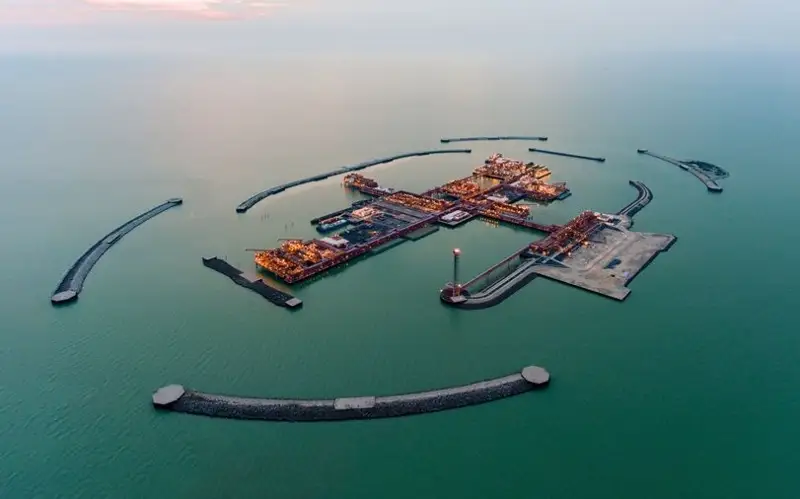
From energy dependence to diversification: Italy and Kazakhstan established diplomatic relations in 1992, shortly after Kazakhstan became independent following the collapse of the Soviet Union. For much of the following three decades, cooperation was centred on energy. Italian companies, particularly ENI, played a major role in large upstream projects such as Kashagan and Karachaganak. This made Italy one of Kazakhstan’s leading European partners in hydrocarbons, but it also created a narrow and energy-heavy relationship (Ghiselli, 2024).
The Strategic Partnership Treaty signed in 2009 formally widened the scope of cooperation, but in practice oil and gas continued to dominate. A more meaningful shift only came after 2022. The war in Ukraine forced Europe to rethink energy security and supply chains, while Kazakhstan, under President Kassym-Jomart Tokayev, stepped up economic reforms with a clear emphasis on diversification and industrial development.
Long accustomed to prioritising industrial cooperation and sustained economic presence, Italy found a natural counterpart in Kazakhstan’s modernisation agenda, giving the relationship the momentum it needed to move beyond the oil rig.
Diplomatic consolidation: This sequence points to more than routine diplomatic activism. A first inflection point came in 2024, when President Kassym-Jomart Tokayev visited Rome and official discussions moved beyond hydrocarbons to encompass manufacturing, logistics and critical raw materials. In May 2025, Prime Minister Giorgia Meloni travelled to Astana to reinforce this trajectory, accompanied by a strong business delegation, with Italian companies actively exploring concrete investment opportunities on the ground. This diplomatic cycle culminated in September 2025 with President Sergio Mattarella’s state visit. As a super partes figure, the President of the Italian Republic was uniquely placed to highlight culture, education and scientific cooperation as pillars of a more mature and durable partnership, one designed to outlast political cycles (Governo Italiano, 2025).
Taken together, these moves suggest that Italy is consciously positioning Kazakhstan as a long-term partner rather than a purely transactional counterpart. They also reflect a more confident Italian foreign policy, enabled by an unusually long period of domestic political continuity, and a sober assessment of Kazakhstan as a stable, moderate and resource-rich actor in one of the world’s most strategically consequential regions.
Co-production, green transition and critical raw materials: These deliberate policy choices are yielding tangible results. By the mid-2020s, Italy had become Kazakhstan’s leading trading partner within the EU, with bilateral trade approaching $20 billion, well ahead of other Union members, whose trade volumes typically stand in the $3–5 billion range (Meloni, 2025).
A central feature of this evolution is the emergence of a co-production model, often described as “Made with Italy”, rather than simply “Made in Italy”, which prioritises joint ventures and technology transfer over the export of finished goods. Italian firms are increasingly establishing production and processing facilities in Kazakhstan, notably in agribusiness and manufacturing, integrating Italian know-how into local value chains (Ministry of Trade and Integration of Kazakhstan, 2025).
Energy remains central to the partnership, but its relative weight has gradually declined as other sectors expand, and its character is evolving in line with the green transition. Thus, Eni has expanded its Kazakh portfolio to include solar and wind projects. Beyond energy production, it has invested close to one billion US dollars in social development programmes in western Kazakhstan, supporting schools, healthcare facilities, transport infrastructure and other local services – a less visible but telling marker of long-term engagement.
Other Italian actors, including Ansaldo Energia, are contributing to the modernisation of power plants, with a focus on improving efficiency and lowering environmental impact. Initial cooperation on hydrogen, while still at an early stage, reflects shared interest in future energy solutions and long-term planning: for Kazakhstan, by preparing for a role beyond traditional exports; for Italy by securing options in emerging energy carriers.
Critical raw materials have also moved up the bilateral agenda. Europe’s green and digital transitions depend on secure access to minerals such as rare earths, lithium, and other strategic materials, at a time of intensifying global competition (including by some of Europe’s key partners). Kazakhstan holds significant reserves and has expressed interest not only in extraction but also in developing local processing capacity. Italy’s engagement focuses on cooperation rather than simple sourcing. Discussions include exploration standards, environmental sustainability and the development of local processing. This aligns with European efforts to reduce strategic dependencies. For Kazakhstan, this offers a pathway to move up the value chain and strengthen its industrial base (Ghiselli, 2025).
Connectivity and soft power: The disruption of traditional routes through Russia has pushed the Trans-Caspian Middle Corridor from the margins to the centre of Europe-Central Asia connectivity. Italian ports and logistics operators are positioning themselves as the key Mediterranean endpoints along this route, which runs across the Caspian Sea and the South Caucasus. This matters strategically: it offers Europe a credible southern alternative, which makes supply chains more reliable and less dependent on just the northern corridors alone (Meloni, 2025).
Connectivity, however, is not only about infrastructure. The launch in 2024 of a direct Milan-Almaty flight, operated several times per week (to the satisfaction of the authors) is a concrete sign of closer links between the two communities. In parallel, the Italian Cultural Institute in Almaty, opened in late 2023 as Italy’s first such presence in Central Asia, has been expanding activities in language promotion, cultural exchange and the creative industries. These initiatives build on a longer artistic connection between the two countries, perhaps best symbolised by Italy’s contribution to the Astana Opera house, now one of Central Asia’s landmark cultural institutions.
Educational and institutional ties have deepened alongside these developments. Kazakhstan’s adoption of the Bologna system since 2010 has facilitated academic compatibility with Europe and supported growing educational exchanges. More than 4,000 Kazakh students are currently enrolled in Italian universities, many supported by Italian scholarships - making Italy, interestingly, the leading destination within the EU and, in global terms, one of the top hosts worldwide, after Russia and China and ahead of the US (Ministry of Science and Higher Education of Kazakhstan, 2025). At the same time, a growing number of publications on Kazakhstan, not only as a travel destination but also as a place of opportunity, have started to appear in Italian newspapers and magazines. After all, few vectors of long-term cooperation carry more potential than youth (Svante, 2025).
Eurasia: emerging bloc or pragmatic convergence?: By the time of writing, Italy and Kazakhstan have built what is arguably one of the most advanced European partnerships in Central Asia. What began as a largely hydrocarbon-focused relationship has evolved into a broader dialogue spanning industry, energy transition, critical raw materials, connectivity and culture.
Does this evolution revive earlier debates - advanced notably by authors such as Bruno Maçães - about “Eurasia” emerging as a new geopolitical bloc linking the Mediterranean to the Central Asian steppes? Probably not. What is taking shape looks far less like a geopolitical construct and far more like a pragmatic alignment of interests among ‘middle powers’, each adapting to a more transactional international environment by diversifying partnerships, reducing vulnerabilities and preserving room for manoeuvre.
The gains are tangible on both sides. For Italy, this alignment delivers incremental advances in strategic autonomy, industrial competitiveness and access to resources and growing markets, facilitated by greater domestic political stability. For Kazakhstan, it supports economic diversification, technological upgrading and deeper ties with Europe, without locking the country into exclusive alignments or bloc logic. At the regional level, it reinforces a European presence in a strategically vital East–West corridor, while remaining fully compatible with Kazakhstan’s long-standing multi-vector foreign policy.
Seen in this light, the Rome-Astana partnership appears well positioned to endure. Its quiet pragmatism may ultimately reveal more about contemporary realpolitik than any grand narrative of emerging blocs.
References:
Cornell, Svante (2025). Institutionalizing Central Asian regional cooperation. Retrieved from https://astanatimes.com/2025/09/institutionalizing-central-asian-regional-cooperation/. Accessed on 15.01.2026.
Ghiselli, Andrea (2024). Italy’s Energy Diplomacy in Central Asia: From Oil to Renewables. The International Spectator, 59 (1), 22-40. Accessed on 10.01.2026.
Ghiselli, Andrea (2025). Italy’s Strategic Pivot in Central Asia: Beyond Energy to Critical Minerals. The International Spectator, 60 (1), 45-62. Accessed on 11.01.2026.
Meloni, Matteo (2025). Italy-Kazakhstan Rising Cooperation Highlights the Key Role of the First EU-Central Asia Summit. Geopolitical Report, 52 (6). Accessed on 25.11.2025.
Ministry of Science and Higher Education of Kazakhstan (2025). International Student Mobility Report: Italy as a Leading Destination. Retrieved from www.gov.kz. Accessed on 20.01.2026.
Ministry of Trade and Integration of Kazakhstan (2025). Joint Ventures and Local Manufacturing: The New Standard for Italy-Kazakhstan Cooperation. Retrieved from www.gov.kz. Accessed on 20.01.2026.
Presidenza del Consiglio dei Ministri (2025). Joint Statement on Enhancing Our Strategic Partnership. Retrieved from https://www.governo.it/sites/governo.it/files/Joint_Declaration_Italy_Kazakhstan_20250530.pdf. Accessed on 11.12.2025.
Note: The views expressed in this blog are the author’s own and do not necessarily reflect the Institute’s editorial policy.