From National to Global: The Internationalization of Science in Kazakhstan
The modern world has entered a phase of intense global technological competition, where leadership in knowledge and resource-intensive fields such as artificial intelligence (AI), semiconductor design and manufacturing, and renewable energy development determines not only economic growth but also the political influence of nations. The main challenge of this period is the rapidly growing gap between technological superpowers, like the United States and China, and other participants in the global market. For developing countries, including Kazakhstan, this poses the risk of falling into a "technological periphery,” where they lose the ability to independently develop key sectors, becoming dependent on imported expertise and foreign licenses. The danger of losing access to knowledge is increasingly real, driven by the fragmentation of the global scientific landscape: measures such as export controls on technologies, restrictions on access to international digital repositories, and the patent dominance of multinational corporations. In this context, concepts like “digital colonialism” have emerged and are actively used to describe technological inequality among nations (Dahiya, 2023).
Such fragmentation inevitably leads to the formation of unilateral technological dependence, which constrains a country’s strategic autonomy in public management. When critical systems from software in the energy sector to biotechnological protocols in medicine are controlled by external rights holders, the state becomes structurally vulnerable. Shifts in political conditions or tightening licensing regimes can result in the paralysis of key infrastructure sectors. Moreover, intellectual dependence suppresses the development of domestic scientific schools, as local researchers are compelled to operate strictly within externally imposed standards and tools, without the ability to influence their foundational architecture.
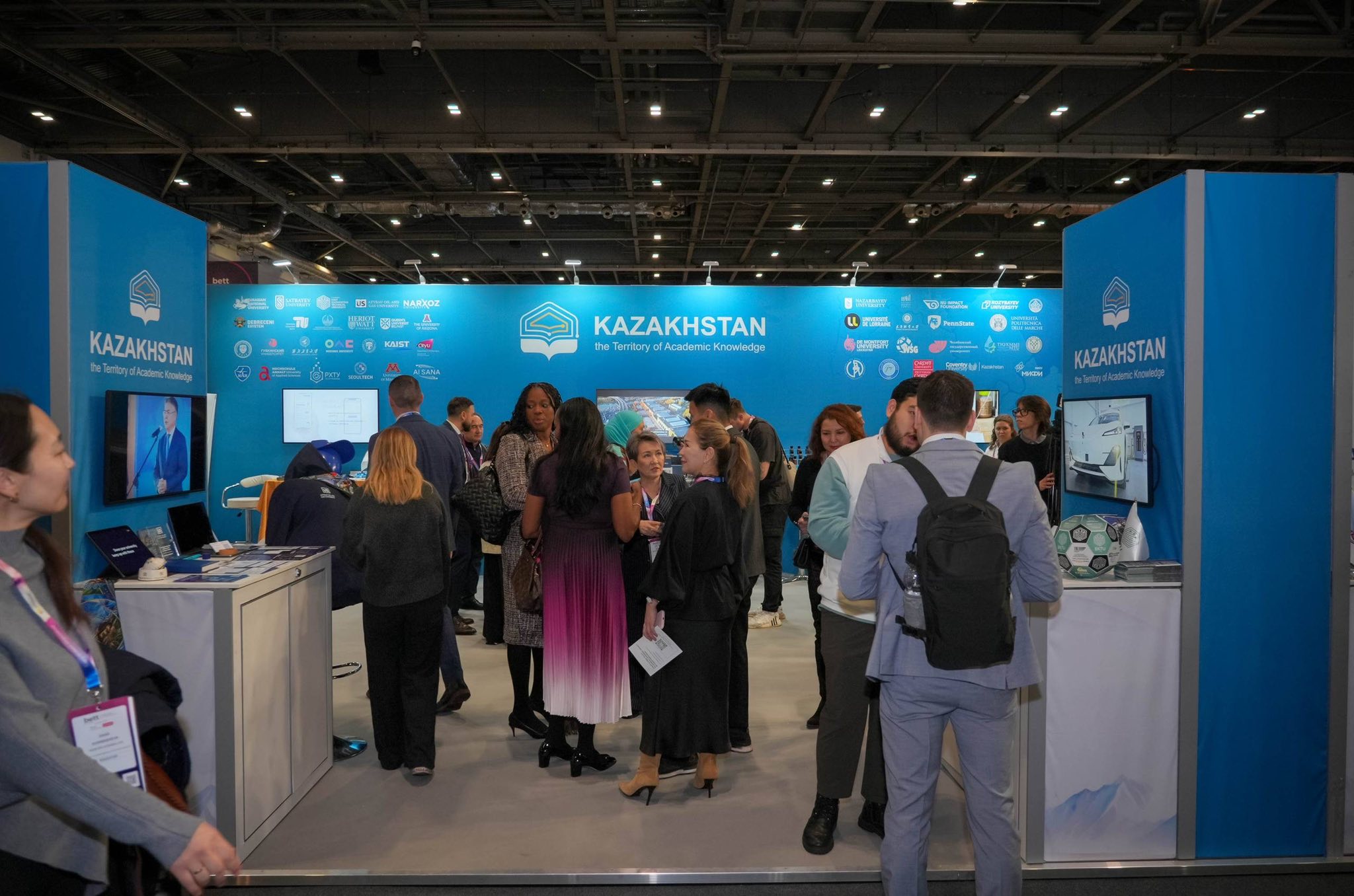
One of the most effective instruments for mitigating technological dependence and protecting against external shocks is the internationalization of science. This process should not be understood merely as formal visibility in global rankings, but as the systemic integration of national researchers into the global knowledge production cycle through joint projects, mobility schemes, and shared infrastructure. In practice, this occurs via participation in international research consortia, the establishment of joint laboratories with foreign technology leaders, and academic mobility programs aimed at acquiring unique competencies. The contribution of internationalization to technological sovereignty is grounded in the accumulation of autonomous intellectual capacity within the country.
At the initial stage, such integration enables national specialists to study the fundamental architecture and operational principles of critical technologies from within. When scientists participate in algorithm development or complex system design as members of international teams, they move beyond the role of end-users of proprietary solutions and become carriers of unique know-how. Thus, even if external ties are formally severed, the accumulated intellectual capital remains within the country, forming a basis for reverse engineering or the development of domestic alternatives. Furthermore, internationalization allows for the diversification of knowledge sources. In a fragmented global environment, an open science strategy enables cooperation with multiple centers of power, thereby avoiding monopolistic dependence on a single knowledge provider.
Through international collaboration, domestic scientific schools can be scaled up to a competitive level. Training aligned with global standards enables national researchers to achieve cognitive parity with global leaders. Once a critical mass of scientists could master advanced methodologies, the country would gain the capacity to independently formulate research agendas and develop priority areas without external moderation. Thus, internationalization functions as an accelerated mechanism for cultivating domestic competencies that, in the event of isolation, can serve as the foundation for technological resilience and national sovereignty. This process also requires the alignment of ethical standards, which is particularly relevant for the development of artificial intelligence.
The formation of a robust scientific and educational foundation necessitates the development of domestic institutional capacity; however, the current status quo reflects both tangible achievements and persistent systemic constraints. Over recent decades, the primary instrument for human capital development has been the international scholarship program Bolashak, which has facilitated the emergence of a cohort of specialists integrated into the global academic and professional environment. At the same time, empirical studies indicate that upon graduates’ return, a gap persists between competencies acquired abroad and opportunities for their effective application within the national scientific and economic system. This gap is associated with institutional barriers, limited demand for research personnel, and weak linkages between academia and the labor market (Bokayev et al., 2021).
Similar structural constraints are evident in the training of scientific personnel. Despite the formal adoption of PhD programs in line with international standards, their development is hindered by insufficient research infrastructure, limited quality of academic supervision, and difficulties related to doctoral students’ publication activity, all of which negatively affect the reproduction of scientific personnel (Satpayeva et al., 2025). As a result, despite the overall growth in higher education graduates, the proportion of doctorate holders remains low, creating a long-term risk of personnel shortage in the scientific sector and reducing the potential for the reintegration of intellectual capital into the national economy.
Beyond human capital, internationalization requires a developed national research infrastructure, the condition of which remains uneven. Although, according to the 2022–2026 Science Development Concept, investments in equipment modernization are increasing, the overall level of wear and obsolescence of the material and technical base remains high. Moreover, R&D expenditure in Kazakhstan, approximately 0.16% of GDP in 2024, remains significantly below that of global leaders (Tarenchikova, 2025). Without overcoming this infrastructural gap, participation in the technological race, particularly in artificial intelligence and high-performance computing, risks remaining largely nominal.
Regulatory policy and public governance constitute the third pillar of systemic resilience. Kazakhstan has demonstrated a gradual shift toward more transparent models. The 2024 Law on Science and Technology Policy aims to address excessive bureaucratization and weak science and business interaction (Official Information Resource of the Prime Minister of the Republic of Kazakhstan, 2024). The development of ethical frameworks for AI and biotechnology signals openness to the international community; however, the effectiveness of this policy depends on the state’s ability to protect intellectual property and to create tangible incentives for private-sector investment in R&D (Editorial Board of “Modern Education,” 2025). In this context, Kazakhstan’s potential lies in transitioning from process administration to the creation of an environment in which the scientific community enjoys meaningful autonomy.
Internationalization increasingly manifests through publication activity, which, despite quantitative growth, requires qualitative adjustment. Web of Science data indicate that in 2024, the number of publications by Kazakhstani authors increased by 20%; nevertheless, challenges persist in the form of manipulated bibliometric indicators and publications in predatory journals (Zakon.kz, 2025). A key corrective mechanism lies in the expansion of international co-authorship: articles co-authored with foreign partners demonstrate citation rates several times higher. This not only enhances researchers’ visibility but also establishes genuine channels for knowledge exchange, thereby reducing academic isolation.
Integration into global and regional research networks is important for Kazakhstan’s long-term resilience. Membership in consortia such as CERN provides access to infrastructure that cannot be replicated at the national level. At the same time, Kazakhstan needs to assume leading positions within Central Asian scientific networks. Joint responses to transboundary challenges from water resource management to desertification create a foundation for collective security and intra-regional cooperation. Engagement within the Organization of Islamic Cooperation and Turkic States framework allows coordination of efforts at the regional level, strengthening Kazakhstan’s potential role as a Eurasian scientific hub.
Science becomes truly global when foreign industries and governments begin to invest in it. The attraction of foreign R&D centers and the establishment of joint ventures in engineering, materials science, and biotechnology serve as indicators of trust in a country’s scientific potential. Technology companies opening laboratories in Kazakhstan facilitate knowledge transfer and create high-skilled employment opportunities, forming a virtuous cycle in which research is directly translated into production. Large investment projects are often accompanied by training programs for local specialists, further reinforcing national capacity. Significant support for internationalization is also provided through multilateral initiatives under the auspices of UNESCO, UNDP, and the World Bank. These projects frequently focus on addressing global challenges, such as climate research or healthcare system development, enabling Kazakhstani scientists not only to secure additional funding but also to contribute to solving problems of global significance. Donor-funded initiatives help establish long-term partnership networks that remain resilient even amid shifts in political conditions.
For effective integration into the global ecosystem, Kazakhstan must develop areas of specialization that can constitute its distinctive contribution to global progress. Rather than attempting to cover all fields, it is strategically justified to focus on specific niches with leadership potential:
- Nuclear science and energy. Possessing approximately 40% of global uranium reserves and planning large-scale development of nuclear power, Kazakhstan has a unique opportunity to transition from a raw material exporter to a supplier of high-tech nuclear fuel and reactor safety expertise (Dolbaya & Southfield, 2025).
- Ecology and climate change. Extensive data on the degradation of the Aral Sea position the country as a natural center of expertise for global climate programs, transforming a local environmental tragedy into a research asset.
- Space technologies. The presence of Baikonur and a national satellite constellation creates opportunities for the development of Earth observation services and natural resource monitoring (Omirgazy, 2023).
- Agrobiotechnologies. In the context of potential global food shortages, the development of drought-resistant crops and innovative bioproducts represents a direct investment in food security, strengthening Kazakhstan’s role as a major agricultural producer (CIS Internet Portal, 2024).
The highest stage of internationalization is scientific diplomacy, which, under conditions of global turbulence, functions as an instrument of soft power. Scientific attachés in embassies and participation in bilateral agreements facilitate trust-building where traditional political tools reach their limits. The involvement of Kazakhstani experts in global climate panels confirms the country’s status as a responsible stakeholder in global governance processes (E²nergy, 2024).
The internationalization of science in Kazakhstan is gradually evolving from fragmented contacts toward systemic integration into the global research landscape. The establishment of a strong domestic foundation will enable the country to become a full-fledged participant in the technological race. Further progress requires sustained focus on strategic niches and the active use of scientific diplomacy. Ultimately, the success of internationalization is measured by the national scientific system's capacity to ensure sustainable development and technological autonomy in the face of contemporary global challenges.
References
Bokayev, Baurjan, Torebekova, Zulfiya, and Davletbayeva, Zhuldyz (2021). Preventing Brain Drain: Kazakhstan’s Presidential “Bolashak” Scholarship and Government Regulations of Intellectual Migration. Public Policy and Administration, 20 (2), 215–230. https://vpa.ktu.lt/index.php/PPA/article/view/27764.
Dahiya, Bhavna (2023). Digital colonialism: Neo-colonialism of the Global South. ResearchGate. Retrieved from https://www.researchgate.net/publication/370938813_Digital_Colonialism_Neo-Colonialism_of_the_Global_South. Accessed on 19.12.2025.
Dolbaya, Tina, and Southfield, Amanda (2025). Kazakhstan’s emerging civilian nuclear energy industry: Implications for U.S. strategic interests. Center for Strategic and International Studies (CSIS). Retrieved from https://www.csis.org/analysis/kazakhstans-emerging-civilian-nuclear-energy-industry-implications-us-strategic-interests. Accessed on 22.12.2025.
Energy (2024). COP29: Kazakhstan’s role and global initiatives. Retrieved from https://eenergy.media/news/31060. Accessed on 22.12.2025.
Editorial Board of Modern Education (2025). Kazakhstan is developing a national model for the ethical use of artificial intelligence in schools. Bilim Expert. Retrieved from https://www.bilim.expert/post/казахстан-формирует-национальную-модель-этического-использования-искусственного-интеллекта-в-школе. Accessed on 22.12.2025.
Internet Portal of the CIS (2024). Kazakhstan may become a major food producer in Central Asia. Retrieved from https://e-cis.info/news/566/120280/. Accessed on 22.12.2025.
Omirgazy, Dana (2023). Kazakhstan explores the limitless potential of the space industry. The Astana Times. Retrieved from https://astanatimes.com/2023/04/kazakhstan-explores-limitless-potential-of-space-industry/. Accessed on 22.12.2025.
Official Information Resource of the Prime Minister of the Republic of Kazakhstan (2024). Implementation of the President’s election program: Draft law “On science and technology policy” approved by the Senate. Retrieved from https://primeminister.kz/ru/news/parlam/realizatsiya-predvybornoy-programmy-prezidenta-zakonoproekt-o-nauke-i-tekhnologicheskoy-politike-odobren-senatom-28584. Accessed on 22.12.2025.
Satpayeva, Zaira, Kangalakova, Dana, Kakizhanova, Tolkyn, and Konstantinova, Kristina (2025). Challenges of PhD training in social sciences and humanities in Kazakhstani universities. Knowledge and Performance Management, 9 (1), 1–15. https://doi.org/10.21511/kpm.09(1).2025.01.
Tarenchikova, Anna (2025). Science in Kazakhstan: Funding is increasing, but slowly. Inbusiness.kz. Retrieved from https://inbusiness.kz/ru/last/nauka-v-kazahstane-finansirovanie-rastet-no-medlenno. Accessed on 22.12.2025.
Zakon.kz (2025). Kazakhstan enters the top 75 countries worldwide by the number of scientific publications. Retrieved from https://www.zakon.kz/sobytiia/6482380-kazakhstan-voshel-v-top75-stran-mira-po-chislu-nauchnykh-publikatsiy.html. Accessed on 22.12.2025.
Note: The views expressed in this blog are the author’s own and do not necessarily reflect the Institute’s editorial policy.