External Electorates and Political Renewal: Moldova’s Experience and Its Implications for Central Asia
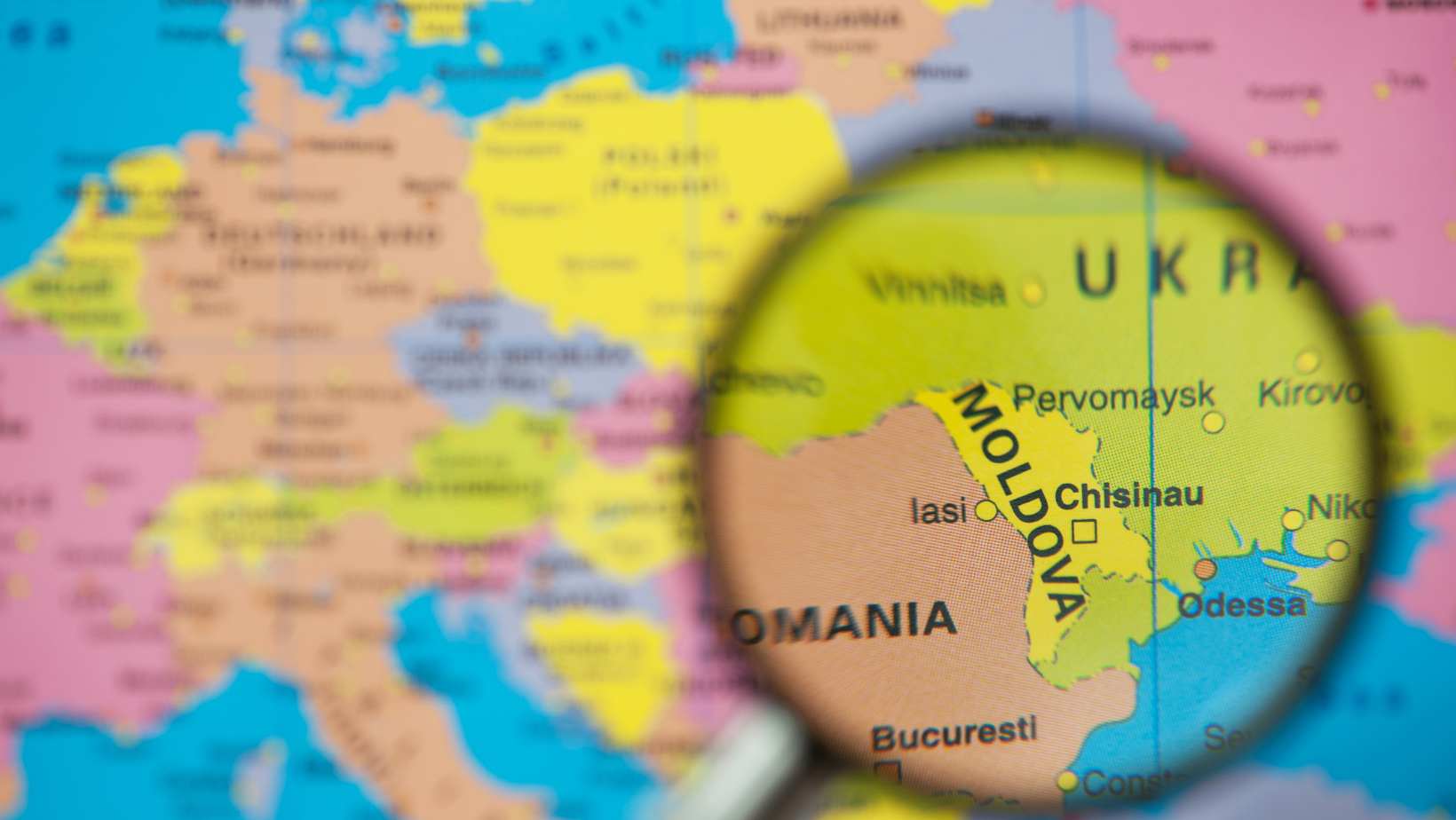
The parliamentary elections held in the Republic of Moldova on 28 September 2025 reaffirmed the country’s pro-European trajectory under conditions of persistent external pressure and hybrid interference. The ruling Party of Action and Solidarity (PAS), led by President Maia Sandu and Speaker Igor Grosu, secured approximately 50 percent of the vote and 55 out of 101 seats, maintaining a single-party majority. The main opposition forces, grouped around the pro-Russian Patriotic Bloc, obtained about 24% of the votes, while several smaller formations failed to surpass the electoral threshold. Voter turnout stood near 52% (Euronews, 2025), slightly below the 2021 level but sufficient to ensure a competitive and legitimate contest.
One of the defining features of the 2025 election was the remarkable mobilization of the Moldovan diaspora, particularly in the European Union. Out of 301 polling stations opened abroad, the vast majority were located in EU member states such as Italy, Germany, France, Romania, and the United Kingdom, where voter turnout reached record levels. The diaspora votes overwhelmingly favored PAS, with more than 78% support (Central Electoral Commission of Moldova, 2025), thus reinforcing the government’s majority and confirming the diaspora’s status as a decisive external constituency in national politics.
Moldova represents one of the most pronounced cases of a dual-space democracy with demographic externalization in which political decision-making and electoral legitimacy are distributed across two interconnected spaces - the domestic electorate and the external diaspora mostly concentrated in countries of the EU. This situation has developed over decades of emigration of Moldovans mainly to western countries and to a lesser extent Russia. Out of a total population of roughly 2.5 million residents, nearly one third of Moldovan citizens now live abroad, forming an extensive transnational population whose size and influence increasingly rival that of the domestic population. The majority of these emigrants reside in European Union member states, most notably Italy, Germany, France, Romania, Spain, and the United Kingdom (ICMPD, 2024). Only a smaller share (around 350 thousand), now in gradual decline, remains in Russia (Oxford Analytica, 2024), showing the economic downturn of the Russian labor market and a broader geopolitical realignment of migration flows toward the European space.
However, the case of Moldova is rather unique as the magnitude of its diaspora has no parallel among countries of similar size, and its spatial concentration in the EU has become a channel of political transmission. Through remittances, civic networks, and electoral participation, the European diaspora functions not merely as an economic lifeline but as an active extension of the national polity beyond the state’s territorial boundaries becoming a structural feature of the country’s political system. For instance, over the last several elections the share of all votes cast in foreign polling stations were between 15-20% of the total vote. But the most striking part is that the electoral preferences of Moldovan diaspora abroad have always been much more pro-European and pro-Western. This political choice has had a decisive role in the election of 2024 when the winning candidate would not be able to win the election without the votes from abroad.
In the previous presidential elections of 2020, Maia Sandu won with a solid 57.72% of the votes. However, without a very strong electoral support from abroad her victory domestically would be just by a narrow margin of 51%. Her victory was secured largely through the extraordinary mobilization of voters abroad, over 260.000 ballots cast, with the overwhelming majority coming from EU countries and supporting the pro-European candidate (Central Electoral Commission of Moldova, 2020). Thus, what was once a peripheral voting group has transformed into a politically coherent constituency that consistently reinforces Moldova’s pro-European orientation. In effect, the country’s electoral geography has extended beyond its national borders, embedding a significant part of its democratic legitimacy in a transnational space shaped by migration, remittances, and civic engagement abroad.
At the same time the votes of Moldovans from abroad have also polarized depending on the country and largely reflecting Russia's confrontation with the West over time. Those who emigrated to Europe and those who settled in Russia represent two distinct sociopolitical trajectories that increasingly manifest in opposing voting patterns. This division has its origins in the self-selective nature of migration. Moldovans who chose to leave for EU countries tended to be younger, more urban, and socially liberal, seeking integration into open and rule-based societies. Those who migrated to Russia, by contrast, were often from more conservative and economically marginalized backgrounds, retaining cultural and linguistic affinities with the post-Soviet sphere. These pre-existing orientations were later reinforced by the ideological and media environments of the host countries. This polarization has deepened over time through what may be described as posterior socialization, whereby emigrants internalize the political culture and value systems of their host societies. Exposure to democratic institutions and civic participation in Europe has amplified liberal attitudes among Western diasporas, while prolonged residence in Russia, under a tightly controlled and state-dominated media environment, has further entrenched paternalistic worldviews.
The case of Moldova, where domestic politics is shaped to an extent by diaspora directly through voting, or indirectly through complex social networks (Ciobanu and Rosca, 2020) is not the only one. What makes it unique is only its scale where the weight of the diaspora in domestic political affairs is very significant primarily because of the great demographic share of Moldovan diaspora relative to the population of Moldova. However, there have been numerous other cases when migrant populations and diasporas in Europe over time have had significant and visible effects on the political trajectory of their home countries. For instance, in the 1960s–70s, return migration from Western Europe contributed to a more pro-European political orientation and democratization in Spain, Portugal, and Greece. Türkiye’s migrant worker generation, though not uniformly liberalizing, transmitted new social and organizational practices in Türkiye and also built strong human-to-human based ties between the EU and Türkiye. These ties have had political dimensions shaping the politics of Türkiye, helping it establish economic cooperation and fomenting Europe-friendly attitudes in Turkish society. Current examples of migrant and diaspora communities in Europe transmitting socio-political practices in their origin country can be seen in the Balkans, where diasporas from these countries in Western Europe are among the most active agents of pro-European attitudes in the society and due to the speed of their integration and the polarization of their political views with those of the older political elites. Pro-European attitudes among Ukrainians have also been shaped largely by their diaspora. The only factor that makes it not so evident in the case of Ukraine is the smaller size of its European diaspora relative to its total population. In 2021, approximately 1.5–1.6 million Ukrainian citizens were legally residing in EU member states (Eurostat, 2022), a figure that remains relatively modest in relation to Ukraine’s population at the time (around 41 million), whereas between one quarter and one third of all Moldovan citizens lived abroad. In the current situation of war, the number of Ukrainians (mainly refugees) living abroad can be around seven million, around 6.5 million of them in Europe. It is obvious that these Ukrainians are engaging in a political socialization process and will change the political landscape of the country in the future.
In recent years, several European countries and the United Kingdom have begun to gradually expand recruitment of migrant workers from Central Asia, marking a notable reorientation of labor flows that were historically directed almost exclusively toward Russia. According to the International Centre for Migration Policy Development (ICMPD), in 2023 first-time work permits for nationals of Kazakhstan, Uzbekistan, Kyrgyzstan and Tajikistan rose by approximately 30%, 39%, 50% and 63% respectively (ICPMD, 2025). Germany signed a migration agreement with Uzbekistan in September 2024 to facilitate labor migration of skilled workers from Uzbekistan to Germany (Rinke, 2024). One news article states that Europe (generally) issued about 75.000 work permits to Central Asians in 2023 (Arabnews.com, 2025). This shift is driven by a combination of demographic, economic, and geopolitical factors. Across Europe, population ageing and the chronic shortage of blue-collar labor, particularly in construction, logistics, and agriculture, have created structural demand for external labor. As traditional sources in Eastern Europe become exhausted, employers and governments increasingly look toward Central Asia as an accessible and culturally compatible labor reservoir.
At the same time, Russia’s once-dominant role as the primary destination for Central Asian labor migration has significantly weakened. The deterioration of Russia’s economic environment, the sharp depreciation of the ruble, and a growing climate of xenophobia and administrative hostility toward migrants have reduced both the profitability and safety of working in Russia. Consequently, many workers from Uzbekistan, Kyrgyzstan, and Tajikistan now perceive the European Union and the UK as more stable and secure alternatives.
Beyond economic pragmatism, there is also a strategic dimension to Europe’s emerging openness toward Central Asian labor. By offering legal migration pathways and employment opportunities, European governments pursue a policy of constructive engagement with Central Asian states, aiming to strengthen economic interdependence and prevent these countries from drifting deeper into Russia’s geopolitical orbit. For the governments of the region, migration agreements with European partners provide both economic relief and political legitimacy, making labor mobility one of the most effective and politically acceptable channels of cooperation with the West. Therefore, the gradual recruitment of migrant workers from Central Asia by European states and the United Kingdom corresponds with the broader strategic objectives of the EU’s Eastern Neighborhood and Central Asia policies, which emphasize connectivity, resilience, and diversification of regional partnerships. While labor mobility has not been the central pillar of the EU’s engagement with the region, it increasingly functions as an instrument of soft alignment, linking economic cooperation with geopolitical stabilization.
With the continuation of the Russo-Ukrainian war and the expected severe economic downturn of post-war Russia, it became clear that Russia ceases to be the main destination for labor migrants from Central Asia. Hence, we can expect a rise in the number of Central Asian migrants in European countries, where in a new political environment distinct from Russia, similar to Ukrainians and Moldovans, they will be exposed to socio-political socialization over time. By entering the European institutional space, migrants are exposed to functioning legal systems, transparent bureaucracies, and workplace environments regulated by formal rights and obligations. Over time, this exposure cultivates new expectations regarding the relationship between the individual, the state, and society, expectations that stand in contrast to the hierarchical and often arbitrary governance practices prevailing in their countries of origin. In this light, questions arise regarding the effect of this on the domestic political environment in countries of origin of these migrants in Central Asia. Depending on the scale of emigration from Uzbekistan, Kyrgyzstan, and Tajikistan, the diffusion of these socio-political remittances could, over time, contribute to incremental civic transformation in Central Asia. Migrants who return or maintain close communication with relatives act as informal agents of norm diffusion, shaping perceptions of fairness, governance, and personal agency. Over the long term, the sustained engagement of Central Asian citizens with European institutional systems may erode the legitimacy of clientelistic governance at home, creating subtle but durable shifts in political culture.
The Moldovan experience shows that long-term migration to the EU does more than shift labor flows. It gradually reshapes political cultures at home. Migrants exposed to European institutions absorb new expectations about governance and society, and these ideas circulate back through family ties, friendships, and online networks. Over time, such social remittances accumulate and become politically visible. Moldova stands out only because its diaspora is exceptionally large and concentrated in Europe; the mechanism itself is neither unique nor new. It has operated in Southern Europe, Central Europe, the Balkans, and Ukraine. As migration from Central Asia increasingly reorients toward Europe and away from Russia, there is no reason to expect a different outcome there. What begins as economic mobility becomes a quiet but powerful channel of civic and political socialization. With enough scale and time, these remitted norms can gradually shift expectations in Uzbekistan, Kyrgyzstan, Tajikistan, and beyond, just as they have in Moldova.
References
Arabnews.com (2025). Central Asian migrants look west, away from Russia. Arab News. Retrieved from https://www.arabnews.com/node/2619191/world. Accessed on 08.11.2025.
Central Electoral Commission of Moldova (2020). Presidential elections from 2020. Retrieved from https://a.cec.md/en/01112020-7078.html. Accessed on 01.11.2025.
Central Electoral Commission of Moldova (2025). Parliamentary elections in Moldova. Retrieved from https://pv.cec.md/. Accessed on 08.11.2025.
Ciobanu, Rodica and Mariana Rosca (2020). Moldovan diaspora’s social networks: Political mobilization and participation. Central and Eastern European E-Dem & E-Gov Days, 338, 323-334. Retrieved from https://doi.org/10.24989/ocg.338.26. Accessed on 08.11.2025.
Euronews (2025). Moldova’s pro-EU party wins high-stakes parliamentary election. Euronews. Retrieved from https://www.euronews.com/2025/09/29/moldovas-pro-eu-party-takes-clear-lead-in-parliamentary-election. Accessed on 11.11.2025.
Eurostat (2022). First residence permits reached pre-pandemic levels. Retrieved from https://ec.europa.eu/eurostat/web/products-eurostat-news/-/ddn-20220809-2. Accessed on 01.11.2025.
ICPMD (2024). Migration Outlook 2024: Eastern Europe and Central Asia (EECA). Retrieved from https://www.icmpd.org/file/download/60848/file/ICMPD%2520Migration%2520Outlook%2520EECA%25202024.pdf icmpd.org+1. Accessed on 08.11.2025.
ICPMD (2025). Migration Outlook 2025: Eastern Europe and Central Asia. Retrieved from https://www.icmpd.org/file/download/63935/file/ICMPD%2520Migration%2520Outlook%2520Eastern%20Europe%20and%20Central%20Asia%202025_EN.pdf. Accessed on 08.11.2025.
Oxford Analytica (2024). Diaspora likely to prove decisive in Moldovan election. Oxford Analytica. Retrieved from https://www.oxan.com/insights/diaspora-likely-to-prove-decisive-in-moldovan-election/. Accessed on 08.11.2025.
Rinke, Andreas (2024). Germany signs agreement on migration with Uzbekistan. Reuters. Retrieved from https://www.reuters.com/world/germany-signs-agreement-migration-with-uzbekistan-2024-09-15/. Accessed on 02.11.2025.
Note: The views expressed in this blog are the author’s own and do not necessarily reflect the Institute’s editorial policy.