Reframing the Central Asia plus Japan Dialogue
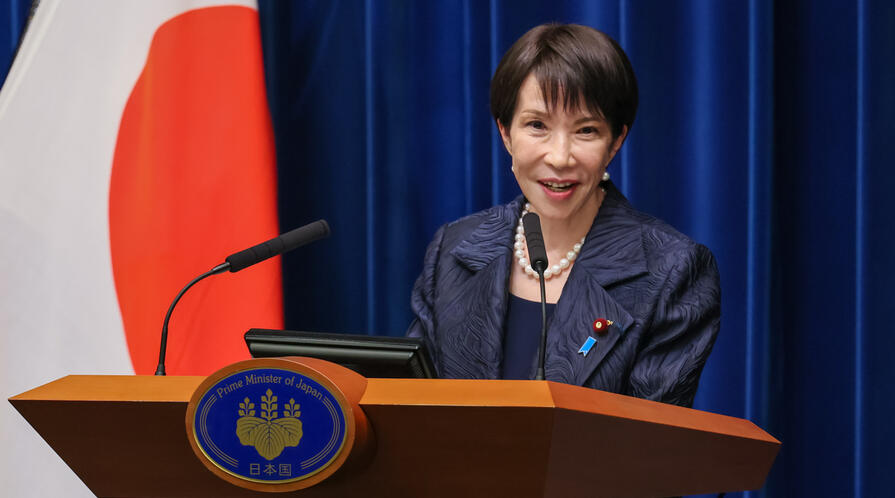
On 20 December 2025, the first summit of the Central Asia plus Japan Dialogue (CA+JAD) was held in Tokyo at the level of heads of government. Hosted by Japan’s Prime Minister, Takaichi Sanae, the summit was attended by the presidents of Kazakhstan, the Kyrgyz Republic, Tajikistan, Turkmenistan, and Uzbekistan.
Having pioneered the “Central Asia plus” format as early as 2004, Japan was nevertheless relatively slow to elevate the initiative to the highest political level, despite the growing popularity of the CA+ framework among other partners. Since 2004, the Central Asia plus Japan Dialogue has convened ten meetings at the level of foreign ministers, underscoring the institutional continuity of the format. However, efforts to upgrade the dialogue to a leaders’ summit were repeatedly deferred. Japan initially planned to host the first leaders’ summit in 2024 to mark the twentieth anniversary of the launch of the Central Asia plus Japan Dialogue. Yet a series of domestic political disruptions in Japan led first to the postponement and subsequently to the cancellation of the meeting following Prime Minister Fumio Kishida’s resignation. His successor, Prime Minister Shigeru Ishiba, was likewise unable to convene the summit owing to the brevity of his tenure [Astana Times, 2024]. It was only after her election in October 2025 that Prime Minister Takaichi Sanae moved decisively to advance the long-delayed summit, prioritizing the revitalization of Japan’s engagement with the Central Asian states as one of her first foreign policy initiatives.
In fact, the geopolitical shifts of recent years have significantly accelerated Japan’s efforts to advance and recalibrate the level of its partnership with Central Asia. The Russian–Ukrainian war, combined with the intensification of China’s regional engagement, has elevated Central Asia’s geostrategic significance and prompted renewed international attention to the region. This reassessment is reflected in the growing number of high-level diplomatic initiatives, including the United States’ first-ever summit with all Central Asian leaders at the White House. More recently, President Trump’s invitation of the presidents of Kazakhstan and Uzbekistan to the G20 summit next year further illustrates the renewed interest in the region and, more importantly, the increasing recognition of Central Asian states as autonomous actors in international politics rather than as post-Soviet satellites – a perception that had long prevailed [Reuters, 2025].
Other external partners have similarly intensified their engagement. The European Union, while maintaining its status as a long-standing strategic partner of Central Asia, has demonstrated heightened interest through more frequent high-level interactions, including summits within the Central Asia plus framework. Actors beyond the traditional Euro-Atlantic and East Asian space, such as the Gulf states, have also entered the region diplomatically, holding their inaugural summits in the CA+ format. Japan’s regional competitors, South Korea, have likewise worked to deepen their partnerships with Central Asia, although, similar to Japan, the elevation of its CA+ dialogue to the highest level was postponed due to domestic political changes [UzDaily, 2025]. Therefore, the convening of the Japan–Central Asia summit was of considerable importance for Japan’s foreign policy. It served not only to reaffirm Tokyo’s sustained interest in the region but also to underscore Japan’s aspiration to maintain its standing as a diplomatic power with an active and credible presence in Eurasian affairs.
Against this backdrop, at the summit Japan introduced the Tokyo Initiative, identifying “Green and Resilience,” “Connectivity,” and “Human Resource Development” as the three priority areas for enhancing future cooperation with the region [MOFA, 2025]. Among them, the Green and Resilience pillar places particular emphasis on industrial development aligned with climate change mitigation and adaptation requirements. Japan and the Central Asian leaders agreed to develop energy transition roadmaps aimed at achieving net-zero emissions, alongside joint efforts to modernize regional energy infrastructure. To operationalize this agenda, Japan proposed the organization of a dedicated ministerial-level meeting on environmental issues, as well as an inter-agency meeting on the green economy and resilience involving Japan and the Central Asian states.
Furthermore, Japan’s well-established expertise in disaster risk reduction and resilience is to be leveraged to expand cooperation through the implementation of two flagship initiatives: Enhancing Urban Resilience to Disaster Risk and Climate Change in Central Asia and Strengthening the System for Region-Wide Disaster Risk Reduction in Central Asia. Both projects are supported by the Japanese government and implemented in collaboration with the United Nations Development Programme (UNDP). In addition, seismic reinforcement of Central Asian cities featured prominently on the summit agenda, with plans to advance earthquake prevention measures through technical assistance provided under the Japan–World Bank Program for Mainstreaming Disaster Risk Management.
With regard to connectivity, the summit discussions focused on strengthening partnerships in logistics, transportation, and people-to-people exchanges. In this context, the parties welcomed Japan’s intention to deploy its Official Development Assistance (ODA) to support the development of the Trans-Caspian International Transport Route, with the aim of enhancing Central Asia’s regional and extra-regional connectivity. The discussions also addressed measures to facilitate tourism, including the potential opening of direct flights between Japan and Central Asian countries, as well as the expansion of people-to-people exchanges through inter-municipal, inter-parliamentary, academic, and student exchange programs.
In addition, the summit highlighted the growing potential of cooperation in emerging technologies, particularly through the launch of the “Japan-Central Asia AI Cooperation Partnership”. This area was identified as especially promising in light of Central Asian states’ ambitions to advance AI capabilities and Japan’s well-established expertise in innovation-driven technological development.
Human resource development, traditionally a cornerstone of Japan’s engagement with Central Asia, expectedly remained one of the key areas of cooperation. The partnership is set to continue through established mechanisms such as the Japan Centers for Human Resource Development, the Project for Human Resource Development Scholarship (JDS), the Japan–IMF Scholarship Program for Asia (JISPA), the ADB–Japan Scholarship Program (ADB-JSP), and other related initiatives. Within this pillar, particular attention was also devoted to cooperation in promoting women’s empowerment, as well as to programs targeting industrial personnel, including employees of small and medium-sized enterprises, and student exchange schemes. Collectively, these initiatives function as important links between Japanese and Central Asian societies.
On the sidelines of the summit, particular emphasis was placed on practical economic engagement between business communities. During the Business Forums, Japan articulated a five-year benchmark for business projects amounting to approximately $19 billion as part of its broader strategy to deepen economic ties with Central Asian states [Japan Times, 2025]. Overall, more than 150 documents, including memoranda of understanding, agreements, and project frameworks, were signed and presented during the meetings. In addition, Japan confirmed its intention to extend support through its Official Development Assistance (ODA), including one grant aid project and one loan for Uzbekistan, as well as four grant aid projects for Kyrgyzstan and two grant aid projects for Tajikistan [Prime Minister’s Office of Japan, 2025].
It should be recalled that Japan has generally pursued a “mission-oriented” approach toward the region, even as Central Asia has often remained peripheral within Tokyo’s foreign policy priorities. Earlier reassessments of the region began in 2004, when Foreign Minister Yoriko Kawaguchi visited four Central Asian states and launched the Central Asia plus Japan Dialogue at the foreign ministers’ level. This was followed by Prime Minister Junichiro Koizumi’s visits to Kazakhstan and Uzbekistan in August 2006 – the first official visits by a Japanese prime minister to the region. However, this initial momentum was not sustained by Koizumi’s successors. A renewed attempt to elevate Japan’s engagement emerged only in October 2015, when Prime Minister Shinzo Abe undertook a landmark tour of all five Central Asian states, becoming the first Japanese prime minister to visit Kyrgyzstan, Tajikistan, and Turkmenistan. Despite the high expectations generated in the aftermath of this tour, no substantial follow-up initiatives materialized, and Central Asia gradually receded in Japan’s foreign policy agenda as Indo-Pacific issues moved to the forefront [Muratbekova, 2022].
Therefore, the 2025 summit reflects another attempt to re-embed Central Asia within Japan’s strategic outlook by consolidating existing partnerships and upgrading them to address the region’s rising geopolitical salience. Japan’s engagement with Central Asia continues to rest on its traditional areas of cooperation, while increasingly prioritizing emerging fields such as artificial intelligence and green energy.
At the bilateral level, on the margins of the summit, Kazakhstan concluded commercial agreements exceeding $3.7 billion. In his address, President Kassym-Jomart Tokayev highlighted several promising avenues for cooperation, including nuclear energy, leveraging Kazakhstan’s resource base and Japan’s advanced nuclear technologies, as well as rare earth elements and other critical minerals, sustainable agriculture, water management, and AI-driven collaboration [Akorda, 2025].
Uzbekistan’s President Shavkat Mirziyoyev proposed the development of a Central Asia–Japan Cooperation Strategy 2040 to provide a long-term framework for promoting sustainable cooperation. He also outlined several practical initiatives, including the establishment of an Investment Fund for Infrastructure and Industrial Development in Central Asia, a regional network of Japanese technoparks, a “Central Asia–Japan Digital Hub,” and a Regional Renewable Energy Training Center in Tashkent. In addition, he suggested creating a Regional Advanced Training Center in Tashkent to train engineers and architects to strengthen seismic preparedness, as well as hosting the first Meeting of Ministers of Education in the “Central Asia plus Japan” format in Uzbekistan next year [Prezident.uz, 2025].
In his address, Kyrgyzstan’s President Sadyr Zhaparov underscored the centrality of climate change and sustainable development on the agenda, noting that as a mountainous country Kyrgyzstan is particularly vulnerable to their impacts. He emphasized the transition to a green economy and the development of renewable energy technologies, expressing interest in the transfer of Japanese green technologies and the creation of new financing mechanisms for environmental projects. Cooperation in the digital sphere, through joint digital initiatives, the transfer of advanced Japanese technologies, and the training of engineering and IT specialists, was also identified as a key priority. Additionally, he highlighted tourism as an important sector and invited Japanese partners to participate in the development of the “Ala-Too Resort.” [Kabar, 2025].
President of Tajikistan Emomali Rahmon likewise underscored the priority of green energy, particularly the further development of the country’s substantial hydropower potential, which he identified as a cornerstone of Tajikistan’s real economy. In this context, he emphasized the role of water diplomacy, referencing the “Dushanbe Water Process” as a platform for advancing regional and global cooperation on water security. President Rahmon also drew attention to Tajikistan’s interest in modernizing road and railway infrastructure and in strengthening national capacities in artificial intelligence through technical support and assistance from Japan, viewing these areas as essential for long-term economic modernization and connectivity [Prezident.tj, 2025].
President of Turkmenistan Serdar Berdimuhamedov also emphasized the “green transition” as a key vector of cooperation with Japan. He highlighted the urgency of addressing climate change, including support for initiatives to establish specialized regional institutions – a Regional Center for Climate Technologies in Central Asia. In addition, President Berdimuhamedov identified the development of transport and transit connectivity, human capital formation, and digital cooperation as priority areas for partnership. He proposed the creation of a dedicated platform, the “Dialogue between Women of Central Asia and Japan,” aimed at fostering inclusive cooperation and strengthening people-to-people ties [TM Embassy, 2025].
Overall, the speeches of Central Asian leaders demonstrate broad alignment with Japan’s agenda, alongside a shared interest in deepening cooperation in areas such as climate change, green technologies, artificial intelligence, and digital transformation. At the same time, the leaders expressed strong interest in applying Japan’s advanced experience in fields including water diplomacy, seismic preparedness, and transport infrastructure development. These practical proposals, if implemented in the coming years, are expected to strengthen the economic dimension of Japan–Central Asia relations, while sustained political commitment on both sides could elevate the partnership to a qualitatively new level of engagement.
References:
Akorda (2025). President Kassym-Jomart Tokayev Addresses the First Central Asia–Japan Dialogue Summit. Retrieved from https://www.akorda.kz/en/president-kassym-jomart-tokayev-addresses-the-first-central-asiajapan-dialogue-summit-20113020 . Accessed on 26.12.2025.
Astana Times (2024). Japanese PM cancels visit to Kazakhstan due to earthquake. Retrieved from https://astanatimes.com/2024/08/japanese-pm-cancels-visit-to-kazakhstan-due-to-earthquake/. Accessed on 26.12.2025.
Embassy of Turkmenistan Republic of Kazakhstan (2025). The President of Turkmenistan participated in the first Summit of Central Asia-Japan Dialogue. Retrieved from https://kazakhstan.tmembassy.gov.tm/en/news/156548 . Accessed on 26.12.2025.
Japan Times (2025). Japan sets a $19 billion business target in Central Asia. Retrieved from https://www.japantimes.co.jp/news/2025/12/20/japan/politics/central-asian-summit-declaration/. Accessed on 26.12.2025.
Kabar (2025). President Sadyr Zhaparov addresses First Summit of the Central Asia-Japan Dialogue in Tokyo. Retrieved from https://en.kabar.kg/news/president-sadyr-zhaparov-addresses-first-summit-of-the-central-asia-japan-dialogue-in-tokyo/. Accessed on 26.12.2025.
Ministry of Foreign Affairs of Japan (2025). Tokyo Declaration of the Summit of the “Central Asia plus Japan” Dialogue. Retrieved from https://www.mofa.go.jp/files/100954362.pdf. Accessed on 26.12.2025.
Muratbekova, Albina (2023). Japan’s value-based relationship in action: The case of Central Asia. Eurasian Research Journal, №5 (2), 19-33.
Prezident.tj (2025). Participation in the Central Asia plus Japan Dialogue Summit. Retrieved from https://www.president.tj/event/news/54289. Accessed on 26.12.2025.
Prezident.uz (2025). Address by the President of the Republic of Uzbekistan Shavkat Mirziyoyev at the first summit of the “Central Asia Plus Japan” dialogue. Retrieved from https://president.uz/en/lists/view/8812. Accessed on 26.12.2025.
Prime Minister’s Office of Japan (2025). The Summit of the "Central Asia plus Japan" Dialogue (CA+JAD) (Summary). Retrieved from https://japan.kantei.go.jp/104/diplomatic/202512/20cajad.html. Accessed on 26.12.2025.
Reuters (2025). Trump says he invited Kazakh, Uzbek leaders to the G20 Summit next year. Retrieved from https://www.reuters.com/world/asia-pacific/trump-says-he-invited-kazakh-uzbek-leaders-g20-summit-next-year-2025-12-23/. Accessed on 26.12.2025.
UzDaily (2025). First Korea–Central Asia Summit postponed to 2026. Retrieved from https://www.uzdaily.uz/en/first-korea-central-asia-summit-postponed-to-2026/#:~:text=Tashkent%2C%20Uzbekistan%20(UzDaily.com,between%20Korea%20and%20Central%20Asia. Accessed on 26.12.2025.
Note: The views expressed in this blog are the author’s own and do not necessarily reflect the Institute’s editorial policy.