The current status of energy transition in Kazakhstan
While the global temperature is steadily rising, by exerting negative consequences all around the world, the importance of energy transition has become explicit. Energy transition is an important process that helps to mitigate and adapt to climate change by incorporating measures that minimize carbon emissions. Particularly, it is achieved through transferring energy production from fossil fuel resources to renewables, as the former is the main source of carbon dioxide (UNDP Climate Promise, 2025). Kazakhstan, a country with abundant fossil fuel reserves, has also taken an active part in the energy transition process.
According to the International Energy Agency estimates for 2020 (IEA, 2022), Kazakhstan’s oil reserves amounted to 30 billion barrels, and gas reserves were equal to 2.3 trillion m3. In terms of coal reserves, Kazakhstan was among the top 10 countries in the world. Such large hydrocarbon capacities led the country’s economy to rely heavily on fossil fuel production. Revenues from the oil and gas sectors account for 30% of the national GDP and 75% of total exports. Domestic energy consumption also highly depends on fossil fuels. They prevail in all sectors of energy consumption, such as electricity, transport and heating. In 2023, 98% of the energy supply was provided by hydrocarbons, with half of this share coming from coal (Gaurav, 2025).
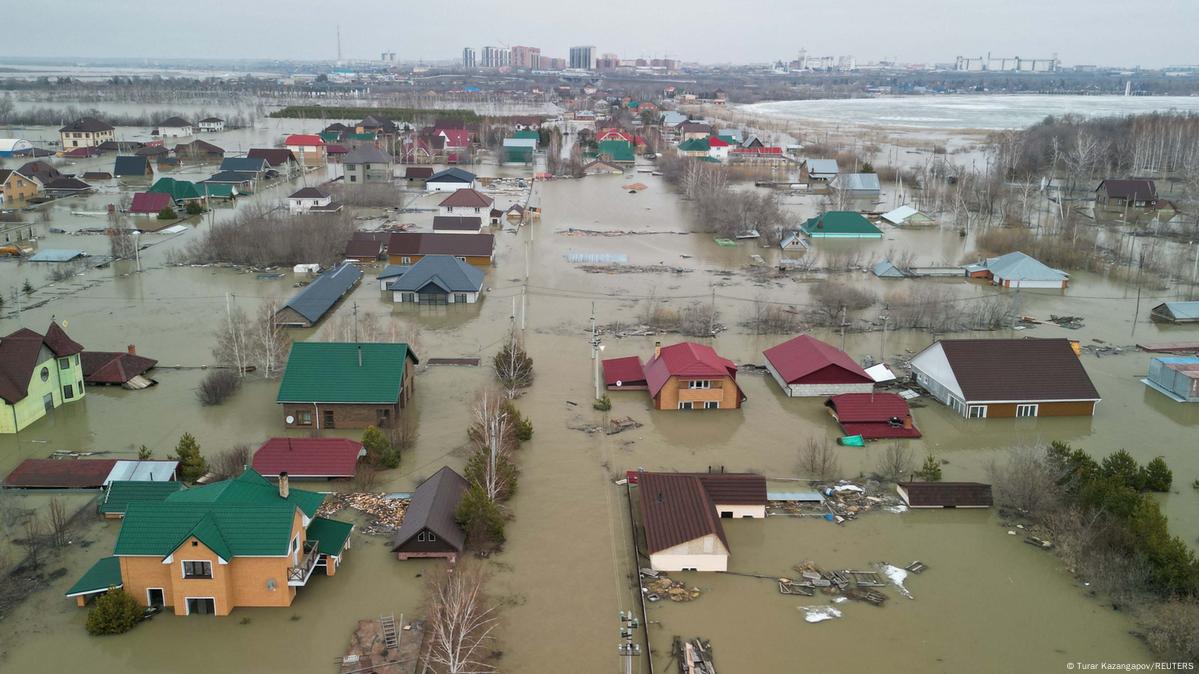
As a result of the active production of fossil fuels, Kazakhstan has experienced high CO2 emissions. For example, in 2020, emissions in the energy sector accounted for 80% of total GHG emissions (IEA, 2022). Such a large amount of emissions accelerates the process of climate change and its destructive impacts on the environment and social well-being. Kazakhstan has already been experiencing an increase in temperature at a faster rate compared to the global average (World Bank, 2025). Its vast territory was exposed to severe flooding in 2024, which led to the evacuation of thousands of people (Sakenova, 2024). Its northeastern part of the Caspian Sea has been dramatically shrinking due to high evaporation and limited precipitation caused by climate change (Amangeldina, 2025). In order to mitigate and adapt to climate change, there is an urgent need for an energy transition.
Along with high CO2 emissions, the hydrocarbon sector faces the problem of limited capacity. Despite current large reserves, they are likely to end in the near future. For instance, according to S&P Global Commodity forecast, oil production in Kazakhstan will experience a downward trend after 2035 (Kazakhstan Energy Outlook 2024, 2024). In contrast, renewable energy, due to the renewability of its sources, can provide energy for a long period of time. Furthermore, Kazakhstan has great potential for solar and wind energy. The potential of solar power was estimated at 2.5 billion kWh per year and that of wind power at 920 billion kWh per year (Jean Chia & Laljebaev, 2024).
Considering all these factors, the government has embarked on the energy transition process by introducing energy efficiency policies. These policies are directed to develop renewable and alternative energies as substitutes for fossil fuels, as well as to minimize carbon emissions in energy production and consumption. The beginning of the energy transition in Kazakhstan can be traced back to 2006, when the “Concept for Transition to Sustainable Development” was adopted to integrate sustainable principles into state planning. In 2009, the concept evolved into the Law on Support for the Use of Renewable Energy, which prioritized the development of RES (Renewable Energy Sources). Kazakhstan’s ambitious plan “Strategy Kazakhstan 2050” also set out renewable energy generation as a priority target. According to the document, renewable and alternative energy sources should make up 50% of total energy consumption by 2050. In addition, the Development Concept for the Electric Power Industry pointed out the aim to increase the share of renewable sources in electricity up to 12.5% by 2029 (Jean Chia & Laljebaev, 2024).
The Concept of Transition to a Green Economy, adopted in 2013, further underscored the aim to raise renewable and alternative energies in electricity production to 50% by 2050, as well as decrease carbon dioxide emissions in the energy sectorby [1] 40%. Kazakhstan also joined the Paris Agreement in 2016 and committed to reducing GHG emissions by 15% from 1990 levels unconditionally by 2030, or by 25% conditionally with foreign support (Lanshina & Zabanova, 2024). This target was reflected in Articles 283 and 286 of the Environmental Code, thus indicating the state’s commitment to implement its Nationally Determined Contributions (World Bank, 2025).
In 2020, President Tokayev announced an ambitious goal to achieve carbon neutrality in Kazakhstan by 2060. This goal transformed into the “Strategy for Achieving Carbon Neutrality by 2060” in 2023. The Strategy aims to achieve net zero by prioritizing the development of renewable and alternative energies. In addition, it incorporates technical measures for decarbonization, such as Carbon Capture and Storage (CCS) technologies and carbon sinks, as well as regulatory revisions related to carbon pricing. The roadmap for the implementation of the Strategy has not yet been finalized. It will establish the objectives, performance indicators, as well as the responsible body for monitoring and implementation of the strategy (Lanshina & Zabanova, 2024).
Along with policy documents, Kazakhstan introduced an Emissions Trading System (ETS) in 2013 to address carbon emissions. Despite some progress in managing CO2 emissions in the industry sector, the ETS has drawbacks that significantly constrain its effectiveness in minimizing emissions. For example, the benchmarking coefficient for emissions is relatively high, while prices are low. In addition, the ETS in Kazakhstan has a limited scope of application. Other high-emission sectors, such as transport and the residential sectors, are not covered by the restriction (IEA, 2022).
Another milestone in the energy transition has been the construction of renewable power plants. As of today, there are 154 renewable energy facilities in Kazakhstan with a total installed capacity of more than three gigawatts (Omirgazy, 2025). The leading renewable source is wind power, which generated 4.5 billion kWh of energy in 2024, which is equal to 60% of the total electricity generated from renewables. Another main source of clean energy in Kazakhstan is solar power, whose electricity output was 1.9 billion kWh (Energy Insights & Analytics, 2025). The share of renewables in total power generation increased up to 5.93%, which aligns with the target of the “Strategy Kazakhstan 2050” to achieve 6% by 2025 (Mamyshev, 2025). In addition, the cost of renewable energy is falling. The price for solar energy decreased by 55%, and for wind energy by 14% from 2014 to 2020 (IEA, 2024).
These positive changes have been driven by state support for renewables. In addition to the Law on Support for the Use of Renewable Energy, in 2014, the government launched feed-in tariffs for solar and wind energy. The feed-in tariffs included offtake contracts and annual indexation to maintain the construction of RES facilities and production of green energy. In 2018, the government replaced the feed-in tariffs with auctions to further facilitate the development of renewable energy projects by increasing control over pricing (Lanshina & Zabanova, 2024).
Remarkable improvements in the sphere of renewables in Kazakhstan are also associated with the involvement of foreign energy companies. In 2023-2024, Saudi Arabia’s ACWA Power, the UAE’s Masdar, France’s TotalEnergies, and China International Power Holding signed agreements with Kazakhstan to construct solar and wind power facilities. In addition, international oil and gas companies located in Kazakhstan have also engaged in investing and constructing renewable infrastructure. TotalEnergies, one of the shareholders of the North Caspian Operating Company (NCOC), took part in the construction of two solar power plants, such as Nomad and M-Kat, and plans to construct a wind plant, Mirny, together with KMG and Samruk Kazyna. Similarly, another shareholder of the NCOC, ENI, built two solar power plants in the territory of Kazakhstan and agreed with KMG to work on the construction of a hybrid power plant (Lanshina & Zabanova, 2024).
The national hydrocarbon and mining companies are also engaged in advancing energy transition goals. The state-owned holding company Samruk-Kazyna, which contributes about 7.5% to the national GDP (Satzhan, 2025), has adopted a Low-Carbon Development Concept to minimize carbon emissions across its firms. As part of its R&D initiatives, the company is developing projects related to CCS technologies, gasification, and biofuels (IEA, 2024). Another major mining holding in Kazakhstan, ERG, has introduced a carbon pricing system and elaborated a corporate decarbonization strategy aimed at achieving net zero by 2050. ERG is also constructing a wind power plant at one of its sites. In addition, the mining company Kazakhmys has launched two solar farms in the Ulytau and Karaganda regions (Lanshina & Zabanova, 2024).
Overall, Kazakhstan has demonstrated its strong commitment to undertake the energy transition. However, it is important to mention that despite the abovementioned progress, the state’s energy transition policy has considerable shortcomings. According to the World Bank Group’s assessment of Kazakhstan’s climate change institutions (2025), the main problem with decarbonization policy is the lack of effective climate action. While the government focused on elaborating institutional frameworks to manage GHG emissions, the implementation, monitoring and financing have been underdeveloped. As organizational and planning issues, the World Bank pointed out the unclearness of responsibilities and insufficiency of collaboration across climate institutions, as well as a lack of detailed adaptation planning and a roadmap of the Strategy. Furthermore, there is no independent institution that would monitor the effectiveness of climate change policy. The mechanism for assessing climate-related expenditures is also lacking.
In order to address these weaknesses, it is recommended to establish a dedicated institution responsible for planning, implementing, and monitoring climate action, as well as ensuring effective collaboration among relevant ministries. In addition, the government should finalize the roadmap for the Strategy, develop a national adaptation plan, and conduct a thorough evaluation of climate-related expenditures. Kazakhstan can achieve its decarbonization targets only if its climate policy is implemented in a comprehensive and coordinated manner.
References:
Amangeldina, Aida (2025). Aral Sea Syndrome: Why Is the Caspian Sea Shrinking? Carnegie Politika. Retrieved from https://carnegieendowment.org/russia-eurasia/politika/2025/03/caspian-environment-crisis?lang=en. Accessed on 09.09.2025.
IEA (2022), Kazakhstan 2022 Energy Sector Review, OECD Publishing, Paris, https://doi.org/10.1787/73d1d69f-en. Accessed on 02.09.2025.
IEA (2024). Clean Energy Innovation Policies in Emerging and Developing Economies. Retrieved from https://www.iea.org/reports/clean-energy-innovation-policies-in-emerging-and-developing-economies. Accessed on 03.09.2025.
Jean Chia, E Ming & Laljebaev, Murodbek (2024). Kazakhstan’s Energy Transition. Case Study. Lee Kuan Yew School of Public Policy, National University of Singapore; Graduate School of Public Policy, Nazarbayev University. Retrieved from https://nur.nu.edu.kz/items/ec888f3d-50c1-4598-a1b0-72d58f871d3f. Accessed on 10.09.2025.
Kazakhstan Energy Outlook 2024 (2024). Kazakhstan Energy Outlook 2024. Prepared by ENERGY Insights & Analytics. Retrieved from https://s3-prod.exia.kz/articles/241204_Kazakhstan%20Energy%20Outlook%202024_EN_compressed.pdf Accessed on 10.09.2025.
Lanshina, Tatiana & Zabanova, Yana (2024). Kazakhstan’s Energy Transition – Tackling the Challenges on Kazakhstan’s Path to Carbon Neutrality. Konrad-Adenauer-Stiftung. Retrieved from https://www.kas.de/en/sustainability-monitor/detail/-/content/kazakhstan-s-energy-transition. Accessed on 12.09.2025.
Mamyshev, Zhanbolat (2025). Kazakhstan’s green energy slide: Renewables lose share in power mix. Kursiv. Retrieved from https://kz.kursiv.media/en/2025-04-24/engk-yeri-kazakhstans-green-energy-slide-renewables-lose-share-in-power-mix/. Accessed on 12.09.2025.
Omirgazy, Dana (2025). Kazakhstan Plans Major Boost in Renewable Energy by 2030. The Astana Times. Retrieved from https://astanatimes.com/2025/05/kazakhstan-plans-major-boost-in-renewable-energy-by-2030/. Accessed on 12.09.2025.
Sakenova, Saniya (2024). Kazakhstan evacuates nearly 98,000 people since onset of flooding. The Astana Times. Retrieved from https://astanatimes.com/2024/04/kazakhstan-evacuates-nearly-98000-people-since-onset-of-flooding/. Accessed on 04.09.2025.
Satzhan, Saltanat (2025). Samruk-Kazyna reports a 7.5% share in the national GDP. Kursiv. Retrieved from https://kz.kursiv.media/en/opinions/engk-tank-samruk-kazyna-reports-a-7-5-share-in-the-national-gdp/. Accessed on 08.09.2025.
Sharma, Gaurav (2025). Kazakhstan moves to shake off its traditional reliance on oil and gas. Forbes. Retrieved from https://www.forbes.com/sites/gauravsharma/2025/05/09/kazakhstan-moves-to-shake-off-its-traditional-reliance-on-oil-and-gas/. Accessed on 02.09.2025.
UNDP Climate Promise (2025). What is the sustainable energy transition and why is it key to tackling climate change? Retrieved from https://climatepromise.undp.org/news-and-stories/what-sustainable-energy-transition-and-why-it-key-tackling-climate-change. Accessed on 02.09.2025.
World Bank (2025). Kazakhstan ‒ Climate Change Institutional Assessment. Retrieved from https://documents.worldbank.org/en/publication/documents-reports/documentdetail/099080125101031105.Accessed on 04.09.2025.[2]
Note: The views expressed in this blog are the author’s own and do not necessarily reflect the Institute’s editorial policy.