The Institutionalization of Central Asian Cooperation: Opportunities and Implications
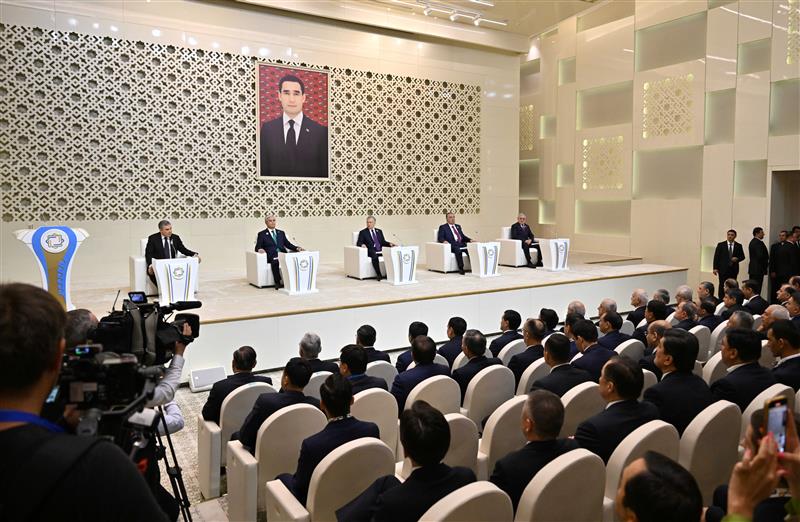
The institutionalization of cooperation among Central Asian states is generating a new geometry of regional governance, one that shapes opportunities and poses implications both for the member states and for external actors. The five states of the region Kazakhstan, Uzbekistan, Turkmenistan, Kyrgyzstan and Tajikistan are re-defining the instruments of regional cooperation, shifting from ad hoc summit and bilateral diplomacy towards more layered mechanisms of institutional interaction (Svante, 2025). A key element in this evolution is the emergence of regular consultative summits of heads of state. For example, in August 2025 the Central Asian presidents met in Awaza, Turkmenistan, in advance of their seventh formal consultative meeting a format which reflects a growing continuity and autonomy of intra-regional diplomacy among the five states (Svante, 2025).
Yet institutionalization is not merely about meetings: it is also about frameworks, strategies and instruments. There are several layers to be considered: the core five-state cooperation at the presidential level; expanded cooperation via ministerial and parliamentary levels; and more intensive bilateral and trilateral linkages, e.g., the Kazakhstan-Uzbekistan axis, as well as trilaterals such as Kyrgyzstan-Tajikistan-Uzbekistan around the Fergana Valley, and a trans-Caspian trilateral of Azerbaijan, Kazakhstan and Uzbekistan (Vakhabov, 2025). Such layering allows for differentiated cooperation: states that are more willing or capable can push ahead, without necessarily requiring all to move in lockstep a model reminiscent of the “variable geometry” found in European cooperation.
The institutionalization of Central Asian cooperation opens a range of opportunities. Firstly, it enhances the agency of the region’s states. By creating regional structures, even if still embryonic, they can coordinate policies across borders in areas such as transport, energy, trade, environment, and security. As one recent survey noted, 56% of experts considered relations among the Central Asian states as stable but competitive, and the lack of institutional mechanisms was flagged by 32% as a limiting factor for cross-border projects (Birbayeva, 2025). The opportunity is that institutionalization can reduce friction, lower transaction costs, and enable more predictable cooperation thereby providing a positive impetus for both regional development and the development of each member state in isolation.
Secondly, economies of scale and connectivity gains emerge. Transit corridors, energy networks, harmonization of regulatory frameworks and joint investment projects can contribute to stronger intra-regional trade and external connectivity. For example, experts cite transport corridors (52%) and energy cooperation (48%) as the most likely drivers of deeper regional integration over the coming decade (Birbayeva, 2025). For the land-locked Central Asian states, improved connectivity across borders and with external markets is a strategic imperative.
Thirdly, a more institutionalized regional cooperation enhances the region’s credibility vis-à-vis external powers and international organizations. The fact that the regional grouping is meeting without external actors present, developing its own normative frameworks and action plans (such as the “Concept for the Development of Regional Cooperation Central Asia 2040” advanced by Kazakhstan) signals that the region is taking ownership of its agenda (Aslanov and Kromov, 2024). Such ownership may allow the region to act as a more coherent partner in multilateral diplomacy.
Nevertheless, the institutionalization process in Central Asia also carries a range of implications both positive and cautionary. On the positive side, deeper cooperation can enhance regional stability. When taking into account the centrifugal pressures of conflict, fragmentation and external competition, the fact that Central Asia is moving in a centripetal direction is significant. Cooperation across borders in sensitive fields such as water-energy, transport and environmental management can help mitigate risks of spill-overs and competition turning into conflict (Golunov and Bitabar, 2025). For example, building multilateral frameworks may reduce bilateral tensions (such as border or water disputes) by embedding them in institutionalized mechanisms rather than ad hoc bilateral bargaining.
However, several caveats must be borne in mind. One significant challenge is the heterogeneity of ambition and institutional capacity across the states. Some states (especially Kazakhstan and Uzbekistan) are driving the agenda, whereas others (notably Turkmenistan and Tajikistan) are more cautious, due to internal priorities or unresolved bilateral tensions (Svante, 2025). This unevenness can lead to variable implementation and might slow down what should be deepening. Furthermore, existing frameworks, although rapidly developing, remain relatively shallow: they are still largely summit-based and lack full-fledged secretariats, binding legal frameworks or even supranational mechanisms. While the cooperative “spirit” is advancing, the formal institutional structure remains underdeveloped compared to other regions and institutional structures such as the EU.
Another implication is the interplay with external actors and the geopolitical environment. The survey of experts shows that external powers and institutional frameworks can both help and hinder regional institutionalization: 43.5% believe such involvement fosters connectivity and stability, while 23.5% argue it diverts resources and distorts priorities (Birbayeva, 2025). The presence of major powers e.g., China’s Belt and Road Initiative (BRI), Russia-led Eurasian Economic Union (EAEU), and the Shanghai Cooperation Organization (SCO) means that Central Asian states navigate both internal institutionalization and external alignments, which is particularly in line with Kazakhstan’s multi-vector foreign policy doctrine, for instance. Thus, institutionalization is not only about internal dynamics but also about position in the global architecture.
From a normative standpoint, institutionalizing regional cooperation can generate normative spill-overs: harmonization of legislation, protocols, regulatory frameworks and the development of shared identity and trust. The emergence of a “Central Asian regional identity” emerging among the states, which had previously lacked a strong sense of common identity beyond their Soviet past can be exemplary in this regard (Golunov and Bitabar, 2025). For Kazakhstan and Uzbekistan especially, this offers a platform to cooperate more proactively, not only bilaterally but regionally. The implication is that over time, regional institutions may contribute to governance convergence, transparency improvements and shared policy frameworks.
However, institutionalization brings a second set of risks. The very process of institutionalizing may lock in certain hierarchies and policy priorities that reflect the interests of leading states rather than an egalitarian regional architecture. There is a risk of a “two-speed region” where core states drive the agenda and others follow at their pace, potentially leading to resentment or further marginalization of less-active states (Vakhabov, 2025). Moreover, the focus on “connectivity” and infrastructure risks overshadowing critical issues such as social development, environmental protection and inclusive governance. The survey reveals that only 14% of respondents saw financial integration (common settlement systems) as a realistic short-term driver, and only 18% saw technology cooperation as likely suggesting that institutionalization may stay concentrated in “low-hanging fruit” areas (transport, energy) while deeper structural cooperation remains elusive (Birbayeva, 2025).
In addition, there may be unintended external implications. As the region institutionalizes, its strategic value as a transit hub and arena of competition increases — which may draw more intense interest (and thus more pressure) from external powers. If regional institutions remain weak, external actors may exploit institutional gaps, undermining sovereignty or driving asymmetrical dependencies. For example, large infrastructure projects run by non-regional actors may bypass regional frameworks or impose terms inconsistent with regional priorities.
A further implication centers on the question of sovereignty and national prerogatives. Regional institutions may require ceding some margin of policy independence, at least in coordinating across borders. This underscores that institutionalization must accommodate not only different national speeds and capacities, but primarily the national interests and objectives of the states involved otherwise inclusion may be superficial rather than substantive (Buranelli, 2021).
In sum, the institutionalization of Central Asian cooperation offers a promising pathway for enhanced agency, connectivity, and regional governance. It provides opportunities for stronger economic integration, improved transportation, energy and environmental collaboration, and a stronger collective voice in international affairs. Yet the implications are conditional: success depends on translating summit-talk into operational frameworks, creating inclusive and equitable institutional mechanisms, and balancing internal capacities with external pressures. For the states of Central Asia, and for external partners (including the EU, China, Russia, and multilateral institutions), the institutionalization of cooperation will matter not only for regional stability, but for how Central Asia positions itself in a rapidly evolving world order.
References
Aslanov, Mirshohid and Otabek, Akromov (2024). At Astana Leaders’ Summit, Uzbekistan’s President highlights ambitions to deepen regional integration. Retrieved from https://thediplomat.com/2024/08/at-astana-leaders-summit-uzbekistans-president-highlights-ambitions-to-deepen-regional-integration/. Accessed on 12.11.2025.
Birbayeva, Ayana (2025). Experts see economic cooperation as Central Asia’s Best path to integration. Retrieved from https://astanatimes.com/2025/09/experts-see-economic-cooperation-as-central-asias-best-path-to-integration/. Accessed on 11.11.2025.
Buranelli, Filippo Costa (2021). Central Asian regionalism or Central Asian order? some reflections. Central Asian Affairs, 8 (1): 1–26.
Cornell, Svante (2025). Institutionalizing Central Asian regional cooperation. Retrieved from https://astanatimes.com/2025/09/institutionalizing-central-asian-regional-cooperation/. Accessed on 09.11.2025.
Cornell, Svante (2025). The gradual institutionalization of Central Asian cooperation. Retrieved from https://www.cacianalyst.org/publications/feature-articles/item/13885-layers-of-cooperation-the-gradual-institutionalization-of-central-asian-cooperation.html. Accessed on 10.11.2025.
Golunov, Sergei and Assel, Bitabar (2025). Central Asian cross-border cooperation. In “Bridging borders Central Asian cross-border cooperation in a comparative global perspective”.
Vakhabov, Jablon (2025). A new Central Asia emerging: Opportunities and challenges. Retrieved from https://centralasiacaucasusinstitute.substack.com/p/a-new-central-asia-emerging-opportunities. Accessed on 12.11.2025.
Note: The views expressed in this blog are the author’s own and do not necessarily reflect the Institute’s editorial policy.